Designing a multi-sided payment and voucher
system for university street-food markets
Reflection
This project reinforced an important lesson: designing digital products often means designing how value moves through a system. By unifying
vouchers, payments, and loyalty into a single platform, Dévorer can scale across campuses without constantly redefining its core logic,
reducing operational risk while improving everyday usability.
Outcomes & Impact
The result is a system that supports reliable meal access through both sponsored vouchers and direct payments, without additional operational
complexity.
A scalable voucher validation system across multiple universities
Seamless NFC payment support using existing vendor infrastructure
Real-time transaction tracking across students, vendors, and campuses
A flexible foundation for future web and API expansion
(Once metrics are available, this section can expand with measurable impact.)
Constraints & Trade-Offs
Several constraints shaped the design decisions:
No direct POS integrations → voucher validation handled via a lightweight scanning interface, while NFC payments rely on existing terminals
Multiple universities → required campus-specific targeting, reporting, and allocation logic
High-volume events → both scanning and tap-to-pay flows had to remain fast and unambiguous
Design System & UI Direction
The visual system was designed to balance approachability for students with credibility for institutions, while supporting both voucher redemption and
NFC-based payments within the same experience.
Clear hierarchy for fast scanning and tap-to-pay interactions
Minimal steps for both voucher redemption and NFC payments during peak hours
Reusable components shared across mobile and admin interfaces
Key principles
Because the product spans mobile interactions and administrative tools, the interface needed to remain consistent across different contexts and
transaction types.
Core User Flows
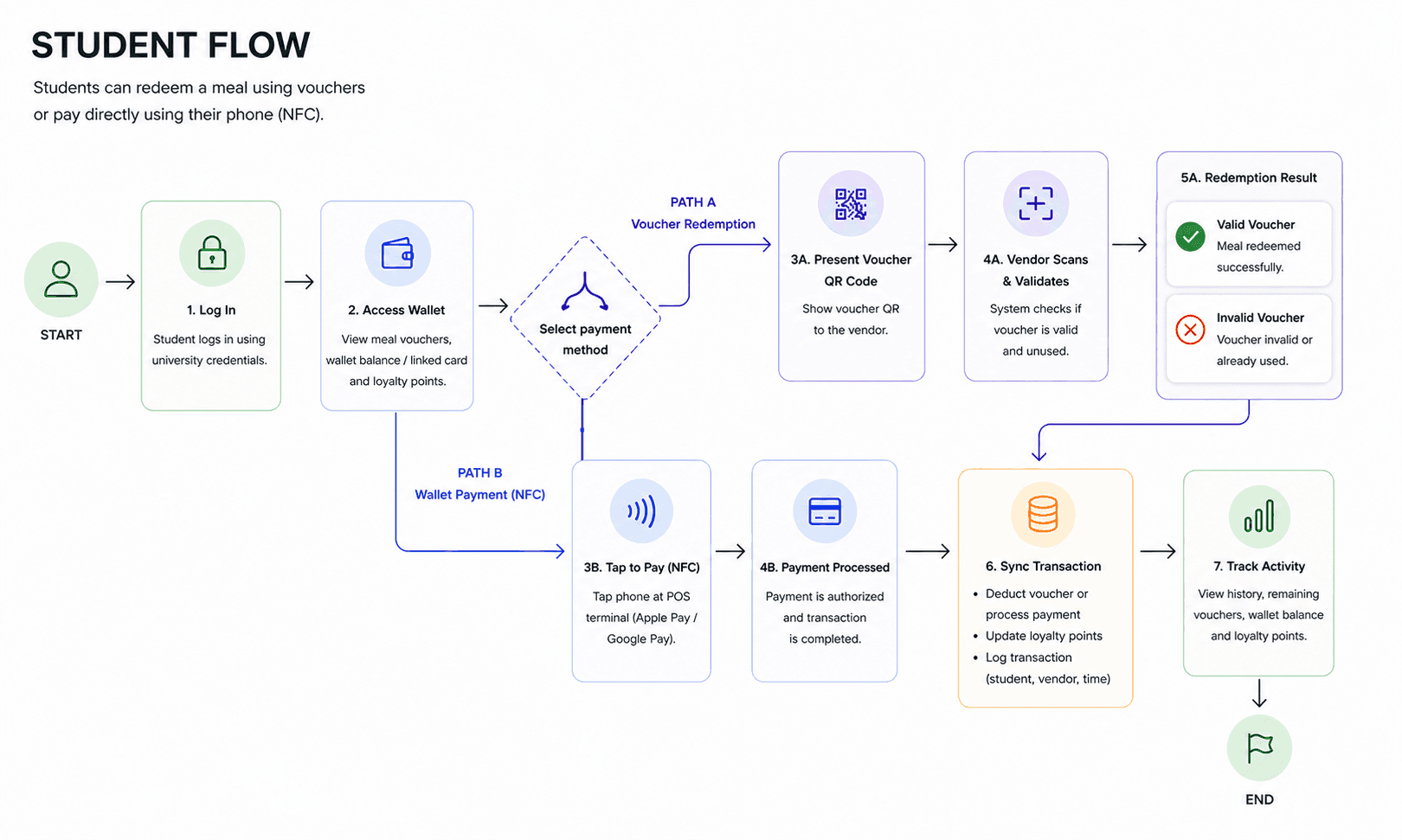
Student Flow
Log in using university credentials
Access wallet (vouchers, linked card, loyalty points)
Select payment method (voucher or NFC payment)
Present voucher QR or tap to pay via NFC (Apple Pay / Google Pay)
Vendor validates voucher or payment is processed
Track transaction history, remaining vouchers, and loyalty balance
Vendor Flow
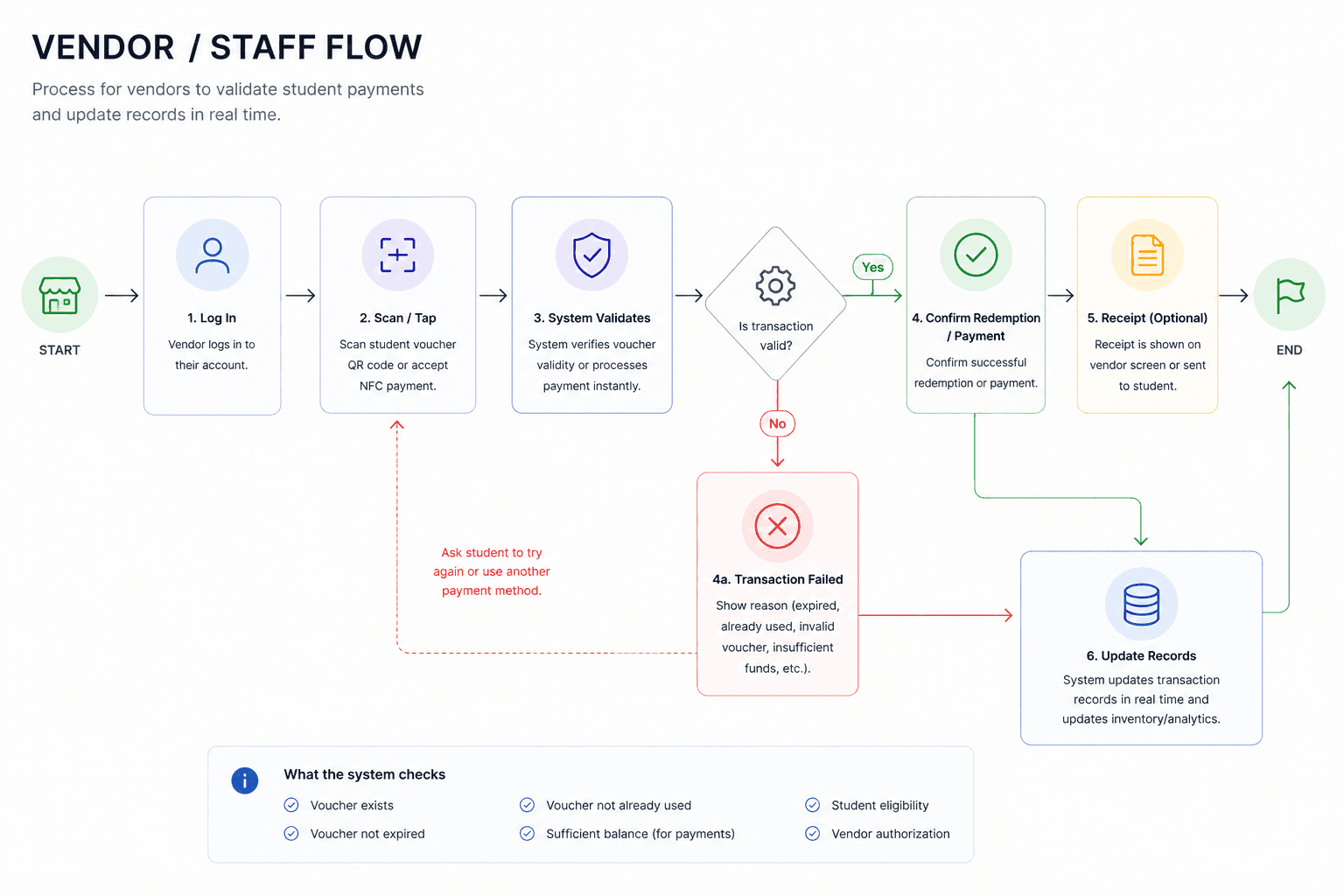
Log in to vendor account
Scan student voucher QR code
System verifies voucher validity instantly
Confirm redemption and update records
Admin Flow
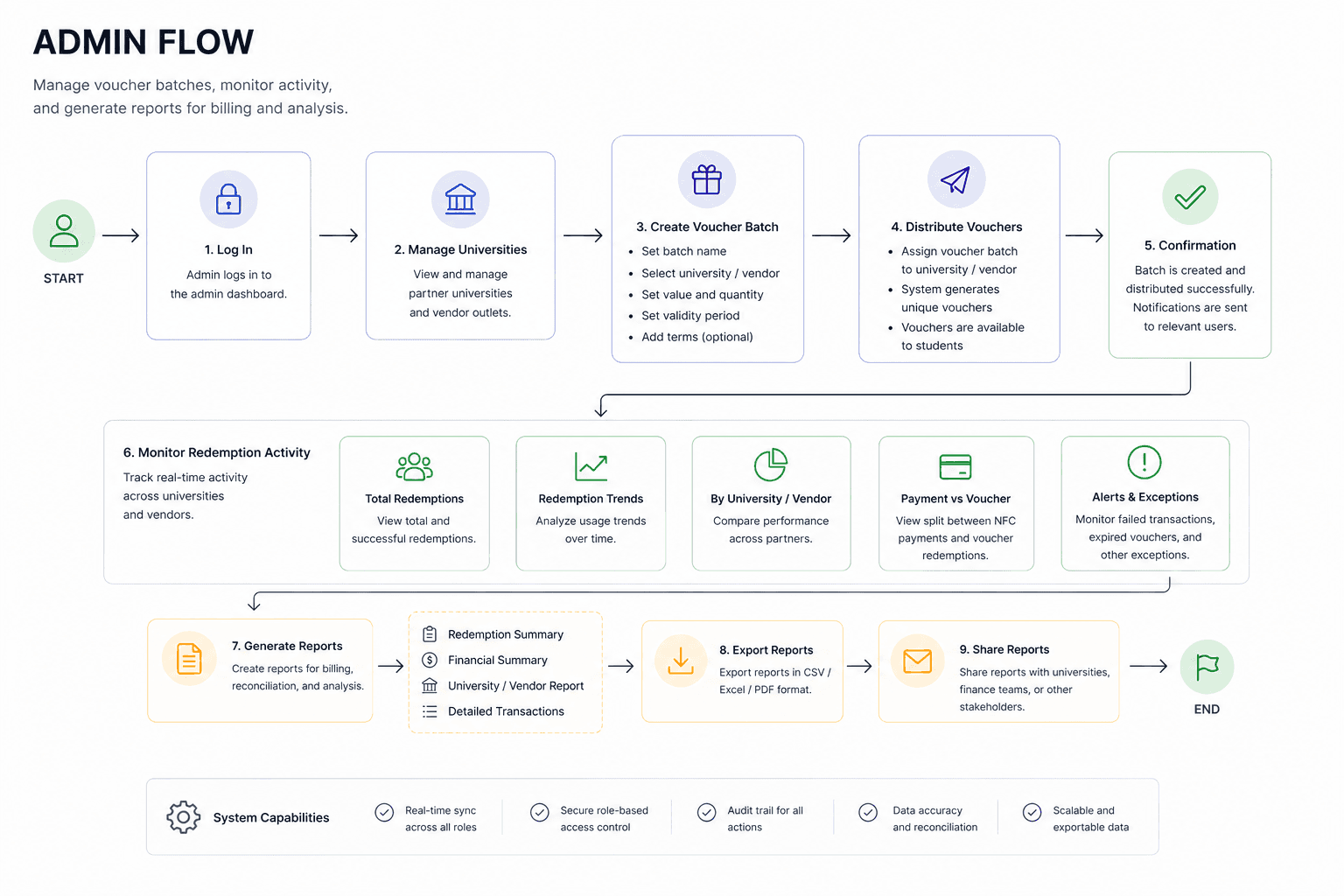
Create and distribute voucher batches to universities
Monitor redemption activity in real time
Generate exportable reports for billing and analysis
These flows ensure the system works as a connected platform rather than isolated screens.
Key Design Decisions
1. Vendor-Side Voucher Validation
Instead of vendors displaying QR codes, students present their voucher QR code and vendors scan it using their own authenticated accounts. The
The system instantly verifies the voucher and returns a clear status, valid if unused, or invalid if it has already been redeemed. This protects vendors
from accepting duplicate vouchers while ensuring redemption data is accurately recorded.
Why this approach:
Protects vendors by confirming voucher validity in real timePrevents reuse or screenshot abuse by marking vouchers as redeemed immediately
Prevents reuse or screenshot abuse by marking vouchers as redeemed immediately
Maintains an auditable record of each redemption across students, vendors, and campuses
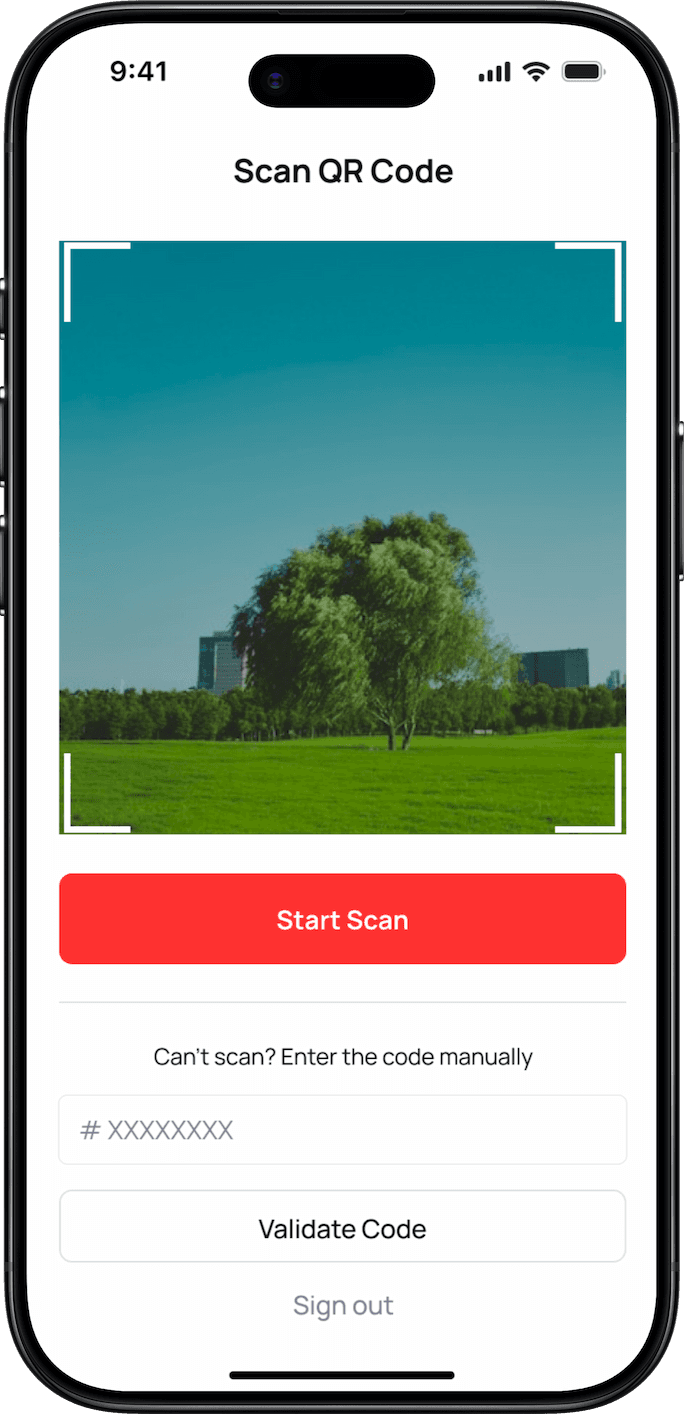
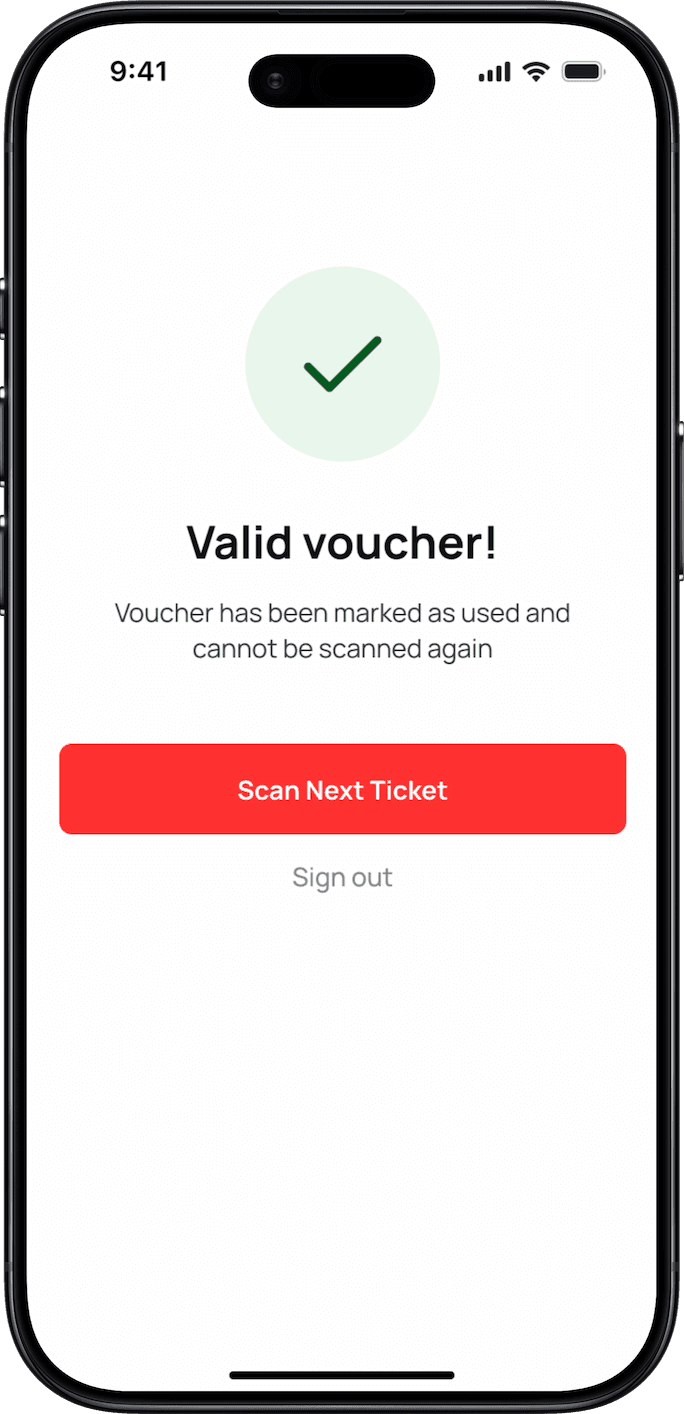
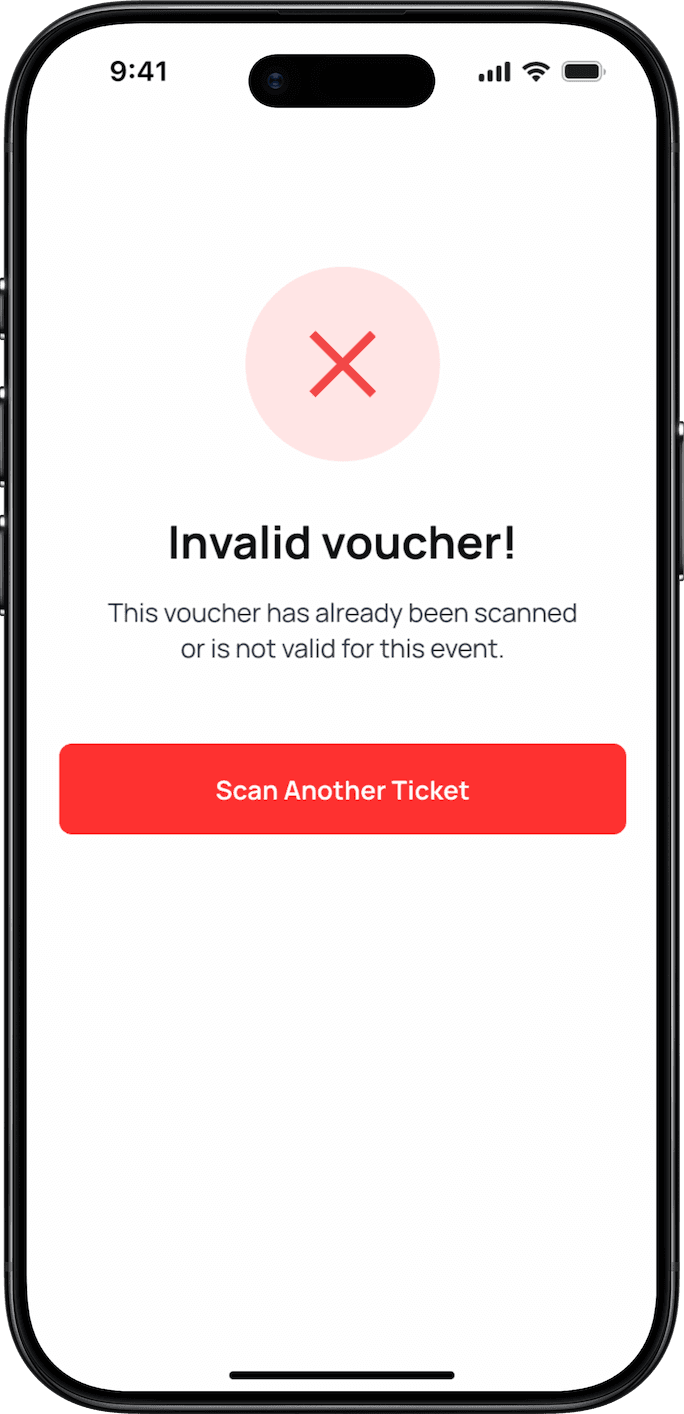
Vendors scan student vouchers to instantly verify validity before redemption
2. Wallet System: Vouchers + NFC Payments
Students can access prepaid meal vouchers or pay directly using an NFC-enabled wallet (Apple Pay / Google Pay) through a linked card.
This allows flexibility during busy market conditions, letting students choose between sponsored meals or direct payment without friction.
Why this approach:
Supports both university-funded vouchers and direct payments
Reduces friction during high-traffic events
Enables fast NFC transactions without relying on app navigation
Keeps all activity (payments, vouchers, points) in one system
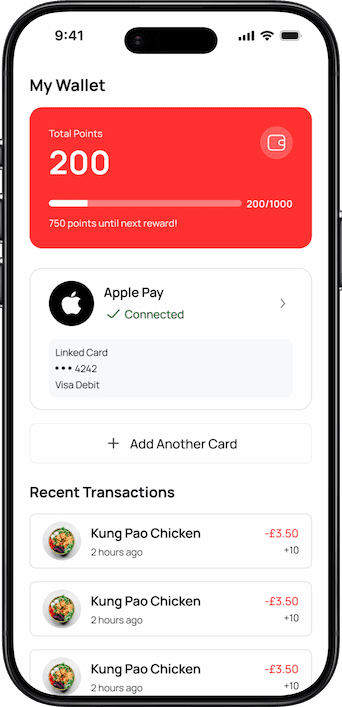
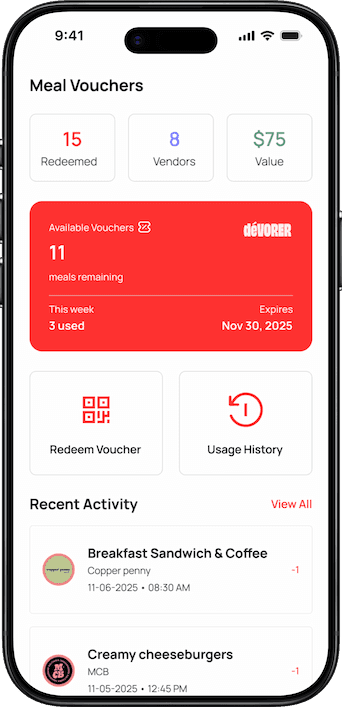
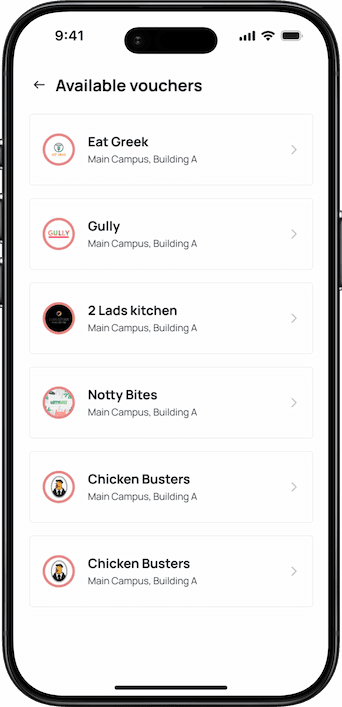
Students can quickly access prepaid meal vouchers directly from the app or pay using their NFC-enabled wallet.
Product Strategy
Before designing screens, I defined non-negotiable system principles:
Universities must retain control over voucher limits and reporting
Redemption must be vendor-driven, not student-driven, to reduce abuse
No direct POS, vendors use a lightweight scanning interface for voucher validation, while NFC payments are processed through existing terminals.
Real-time tracking to support billing and accountability
Mobile-first, wallet-compatible access for students
These principles shaped every design decision that followed.
The Problem
University-funded food programs are often:
Manual, slow, and hard to audit
Vulnerable to misuse or double redemption
Disconnected from long-term student engagement
At the same time, student food markets lack a central communication and loyalty layer, making promotions and sponsored meals difficult to coordinate at scale.
The challenge wasn’t just “designing an app”, it was designing a system universities could trust.
My Role & Scope
Role: Lead & Sole Product Designer
Scope: Product strategy, UX architecture, UI design, design system, handoff
Platforms: iOS, Android, Admin Dashboard
Stakeholders: Dévorer founders, university partners, vendors
I owned all design decisions and acted as the bridge between business goals, technical constraints, and user needs.
PROJECT OVERVIEW
Dévorer is a mobile-first loyalty and digital voucher platform designed to help universities fund student meals while driving repeat engagement for street-food vendors.
This video shows Dévorer in action on campus — students ordering, vendors serving, and the teams collaborating in real market settings. The sections
below focus on the design decisions and system thinking that make these interactions work at scale.
The product solves three connected problems:
Universities needed auditable, fraud-resistant meal distribution
Students needed simple, wallet-based access to sponsored meals
Vendors needed fast, low-friction redemption without POS hardware
I led and executed the end-to-end product design, from system definition to production-ready flows, working closely with the client to shape both the product and its rollout strategy.
Let's talk
about your
product
Schedule a Strategy Call
PREV. PROJECT
Let's talk
about your
product
Schedule a Strategy Call
GO BACK
Go and view on Desktop.
Mobile version isn't ready yet.
I'm busy and I have bills to pay.