Go and view on Desktop.
Mobile version isn't ready yet.
I'm busy and I have bills to pay.
GO BACK
Movva — Designing
Decentralized Urban Logistics
NEXT PROJECT
Let’s talk about your product
Schedule a Strategy Call
Let’s talk about your product
Schedule a Strategy Call
Role
Product Designer
Collaborators
Product Manager, Founders, Frontend
& Backend Devs, Mobile Devs etc.
Duration
Jan 2025 - Jul 2025
Visit website
Deliverables (2 products)
Mover App & Sender App
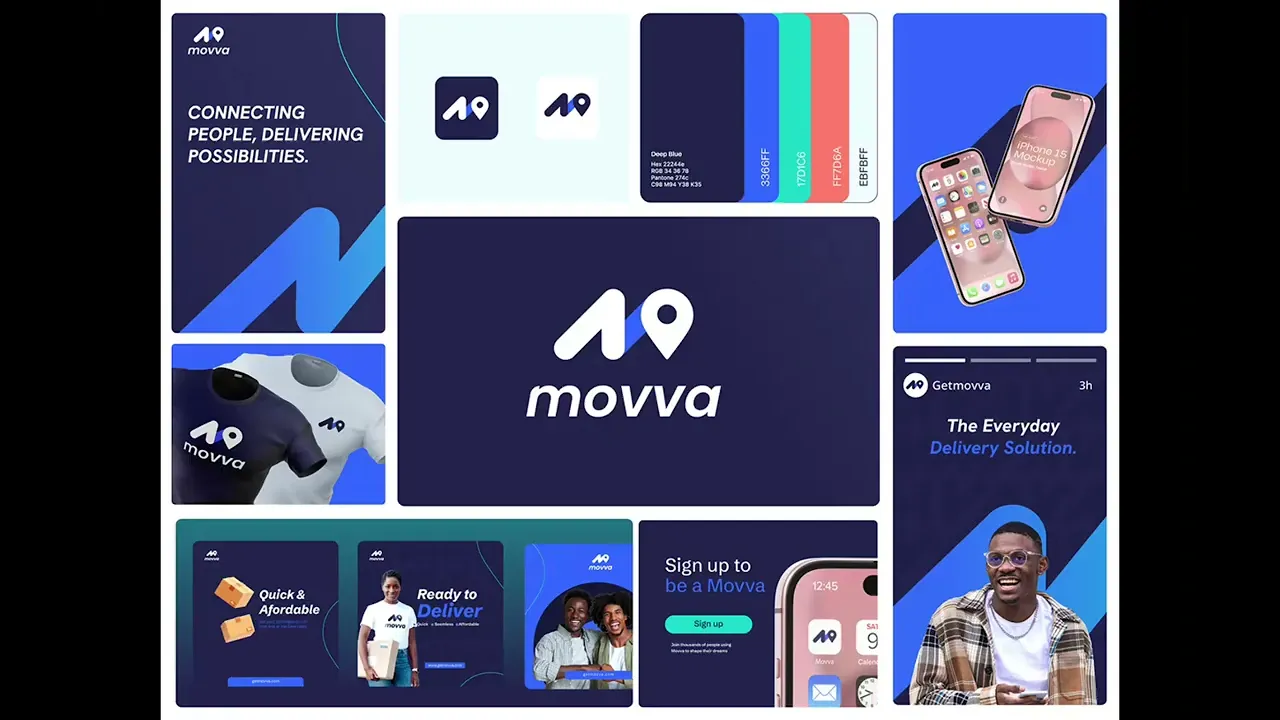
Movva is a decentralized last-mile delivery marketplace empowering individuals to earn income by delivering packages along their daily public transport routes. The platform connects senders with vetted "Movvas" and insures packages, aiming to transform logistics and foster community economic empowerment in Africa and beyond.
Movva was conceived as a response to Lagos' fragmented and costly logistics system. Traditional fleet-based delivery services excluded small businesses and everyday people from affordable logistics options, while unemployment remained high.


The affordability gap and a ready supply of movers — side by side, unconnected.
Rush hour hums through Yaba. Three orders sit paid-for in a stall, going nowhere because of the hefty delivery fee. A student boards a bus to Ikeja—exactly the same route the parcels need. The city is full of movement, logistics just isn't tapping it yet.
Opening Scene

Lagos, with its population of over 20 million people, is a bustling economic hub and a focal point for trade and commerce in Nigeria. However the city's logistics infrastructure is severely strained strained by:
High Costs: SMEs lose out on sales due to the fact that the traditional delivery systems rely on fleets of bikes, and vehicles, resulting in expensive services that many individuals and customers cannot afford.
Lack of Accessibility: Logistics solutions are often tailored for established businesses, leaving small and informal traders with limited options for moving goods.
Inefficiency: Handling multiple orders with different destinations, rising fuel costs, fleet maintenance challenges, and the added burden of local council regulations and task force regulations and task force interventions, further complicating timely deliveries.
Design Challenge: How might we create an inclusive, affordable and trustworthy delivery experience for both senders and movers?
Problem Statement
Research & Insights
Users already move: design just had to match and protect.
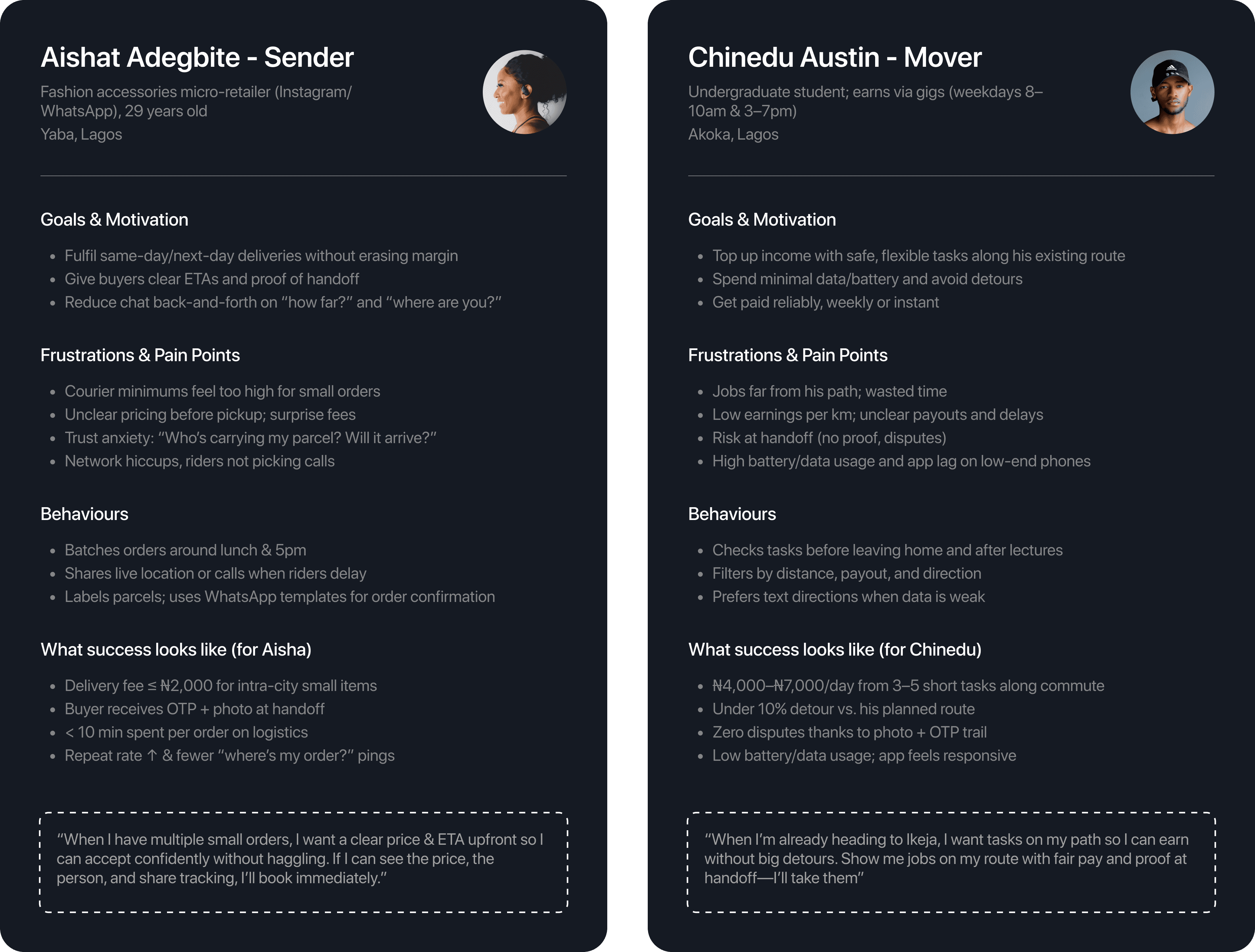
User Persona
Meet Aisha and Chinedu—the sender who needs price clarity and the mover who needs fair, on-route work with visible protection.
Design Process
(a) User Flows
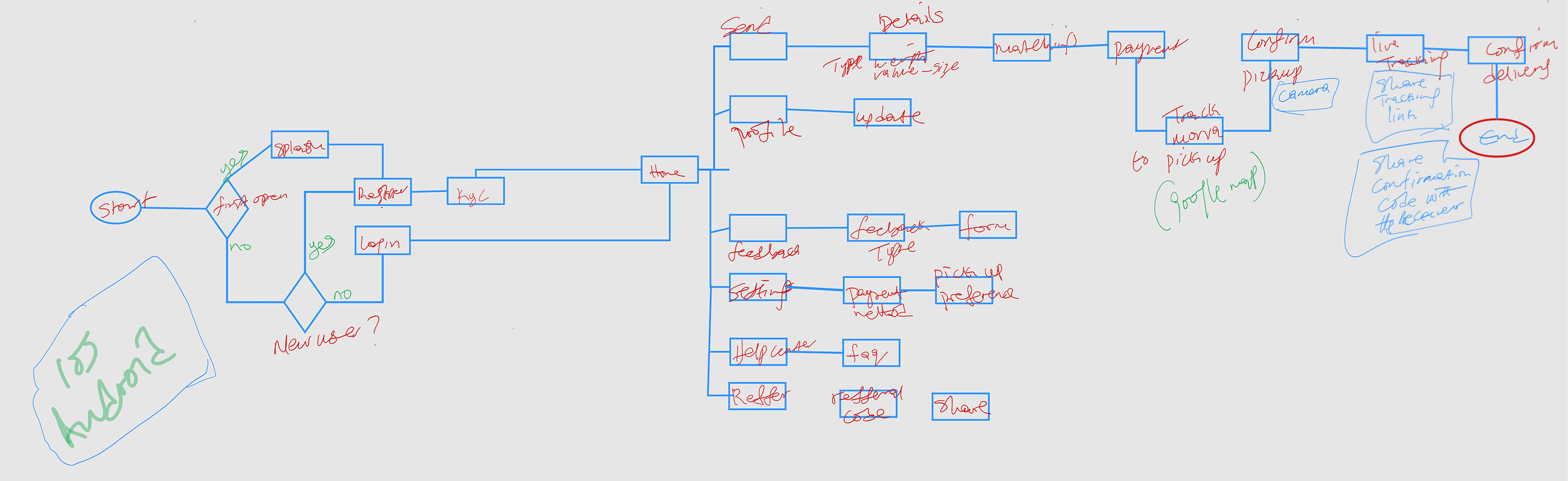
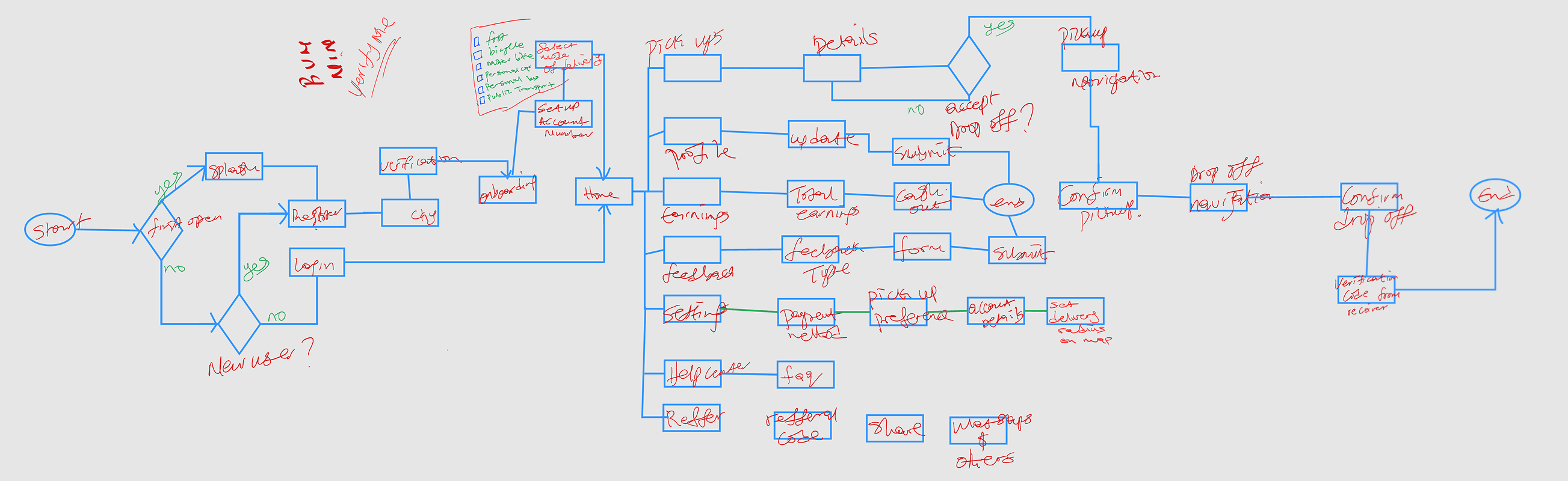
I mapped out two primary flows:
Sender Flow - Submit Details → Book → Track Delivery.
Mover Flow - Accept task → Navigate → Confirm drop-off
Both flows emphasized clarity, trust and simplicity.
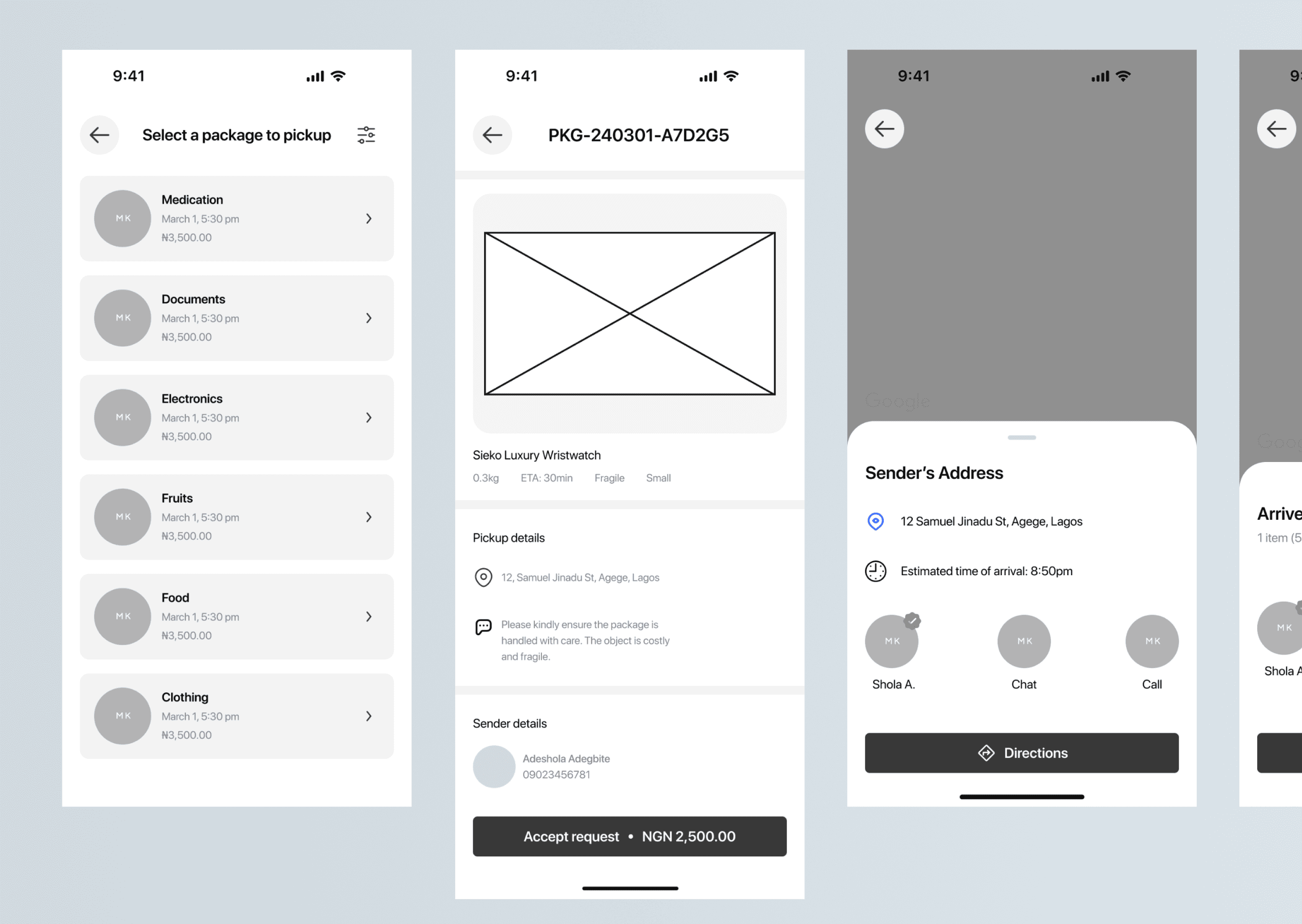
(b) Wireframes
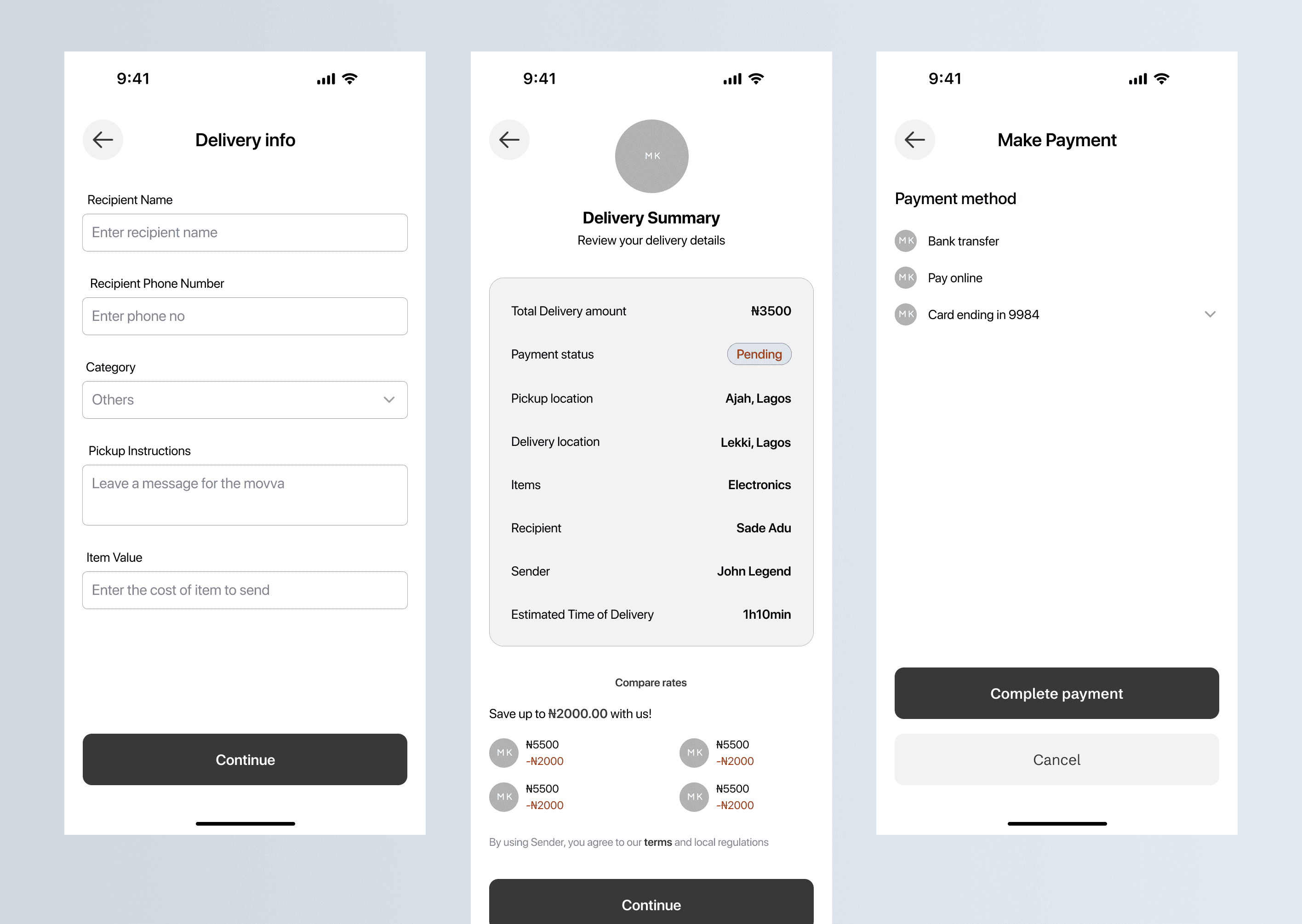
Sender App: Simple booking screen with transparent pricing breakdown.
Mover App: Task list optimized for low-data environments, with easy navigation and confirmation code for proof to authenticate delivery.
(c) High-Fidelity Prototypes
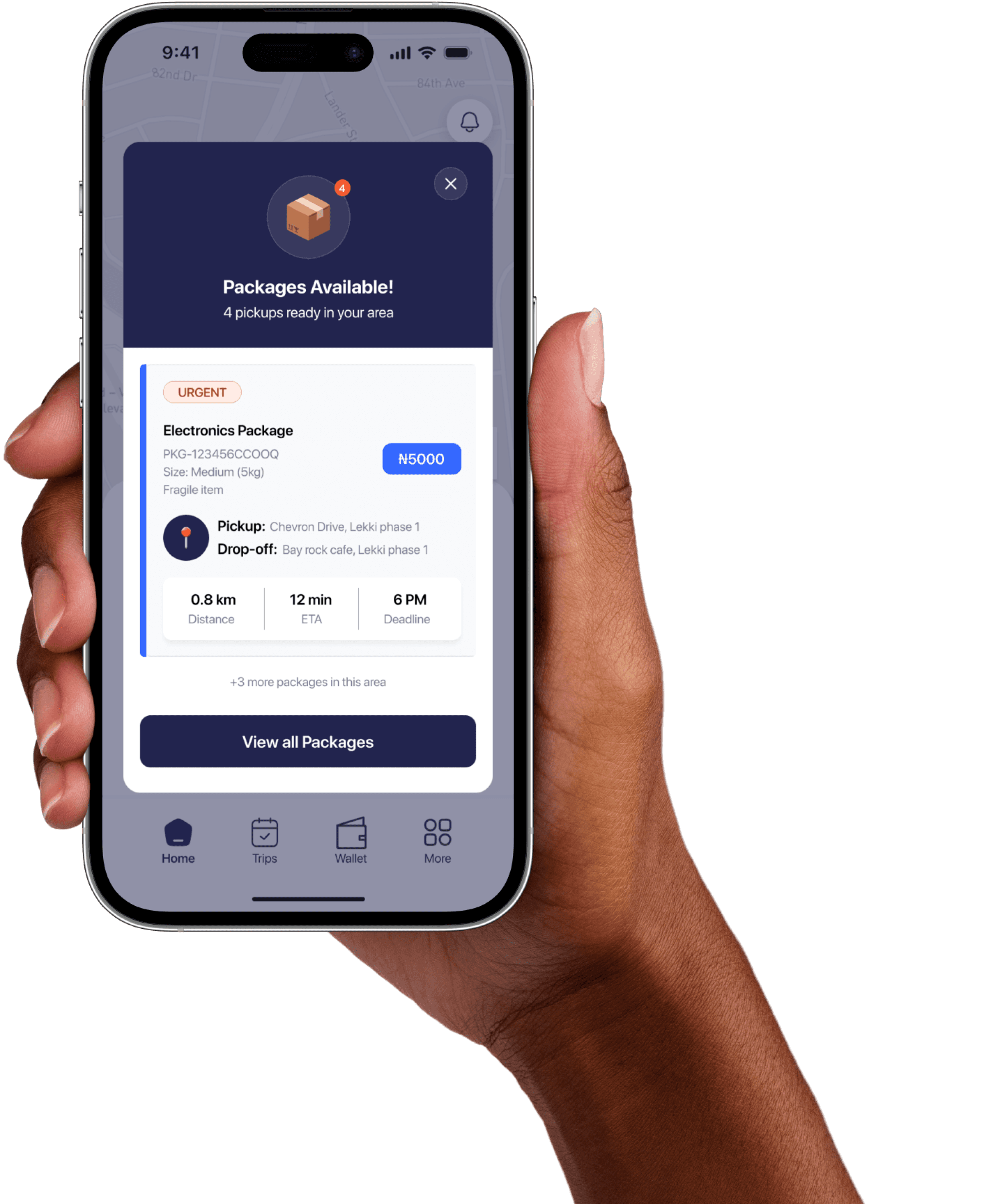
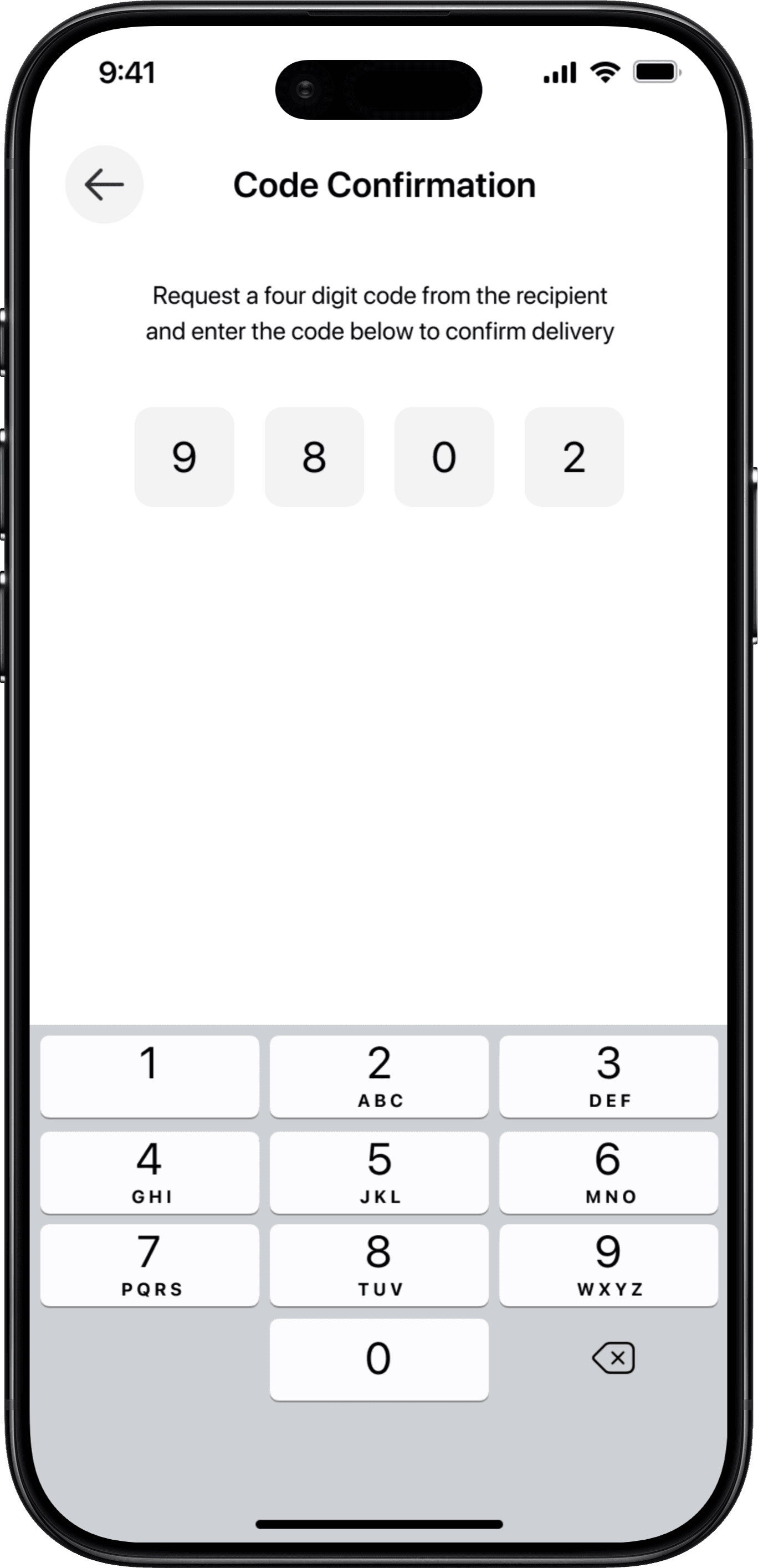
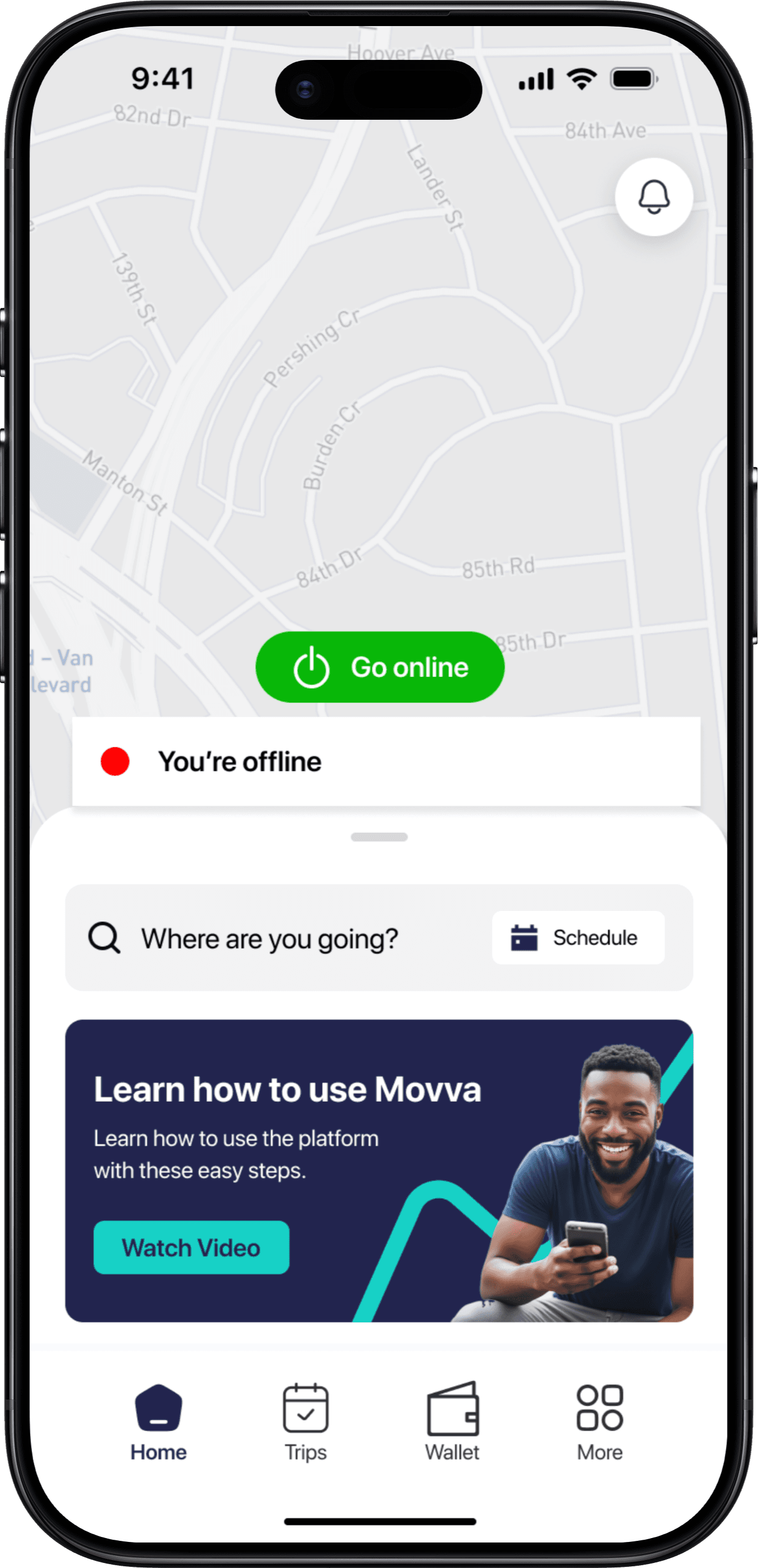
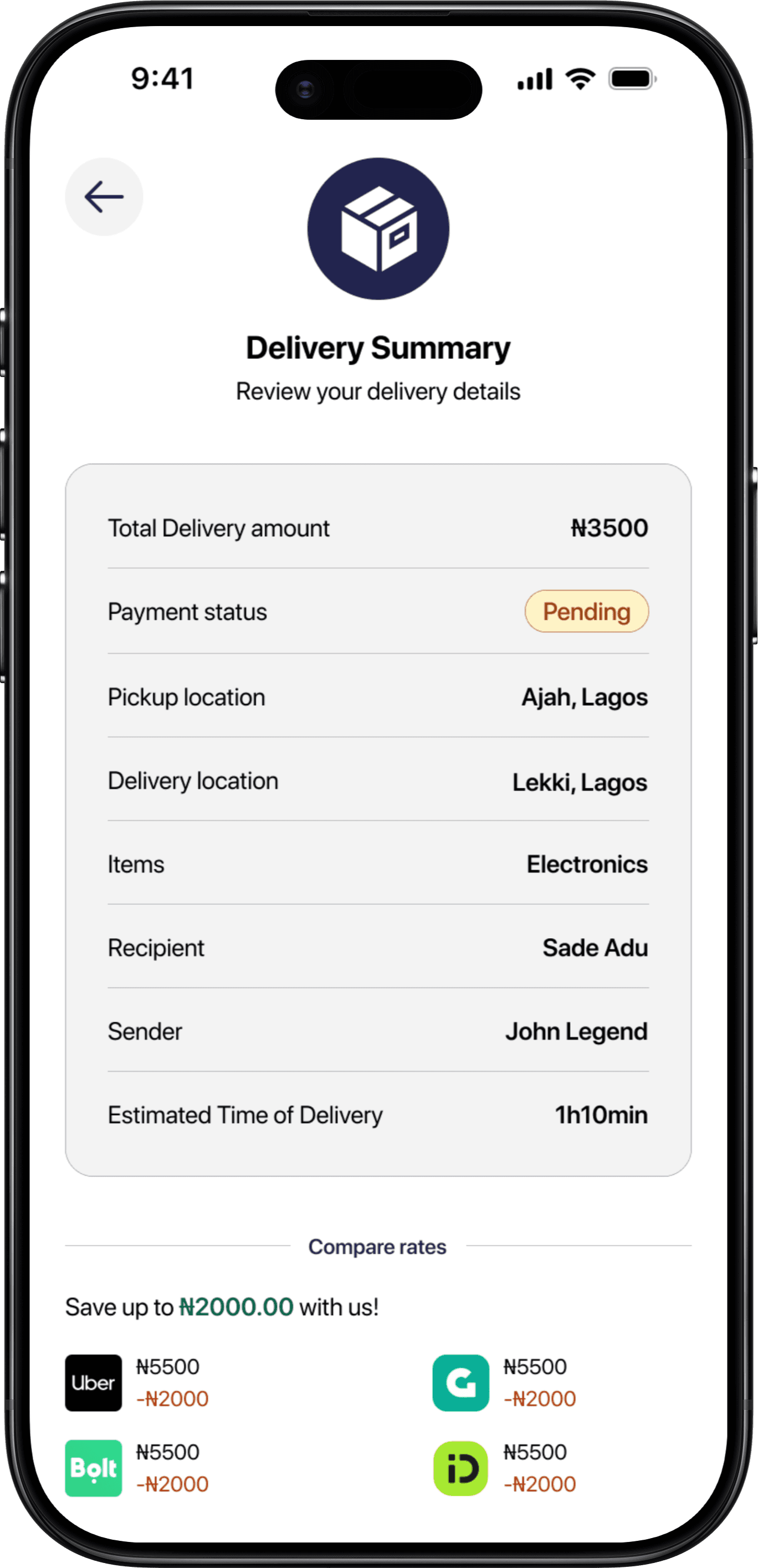
Design direction: Created a simple and mobile-first experience that keeps the price, ETA, and who's handling your parcel always clear, so people can book without guesswork. Senders see transparent pricing before they confirm, get a shareable tracking link and delivery is verified with a recipient-only 4-digit code instead of photos. Movers get a feed of jobs that match
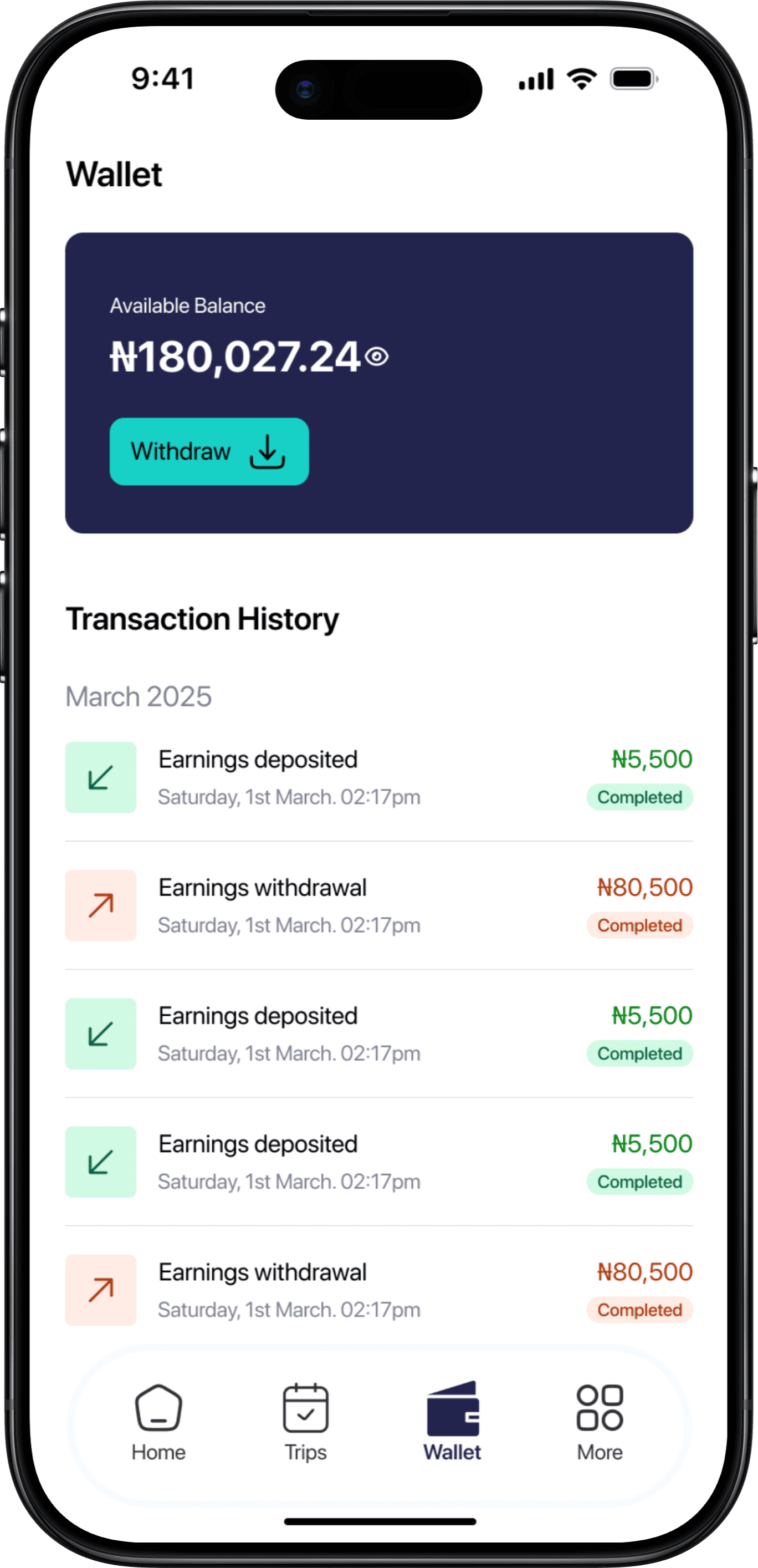
their route and time, with a clear payout and small detour estimate, plus navigation that still works when data is weak. The whole flow tolerates poor connectivity by queuing actions and syncing later, so senders stay informed and movers keep earning.
Challenges & how we solved them

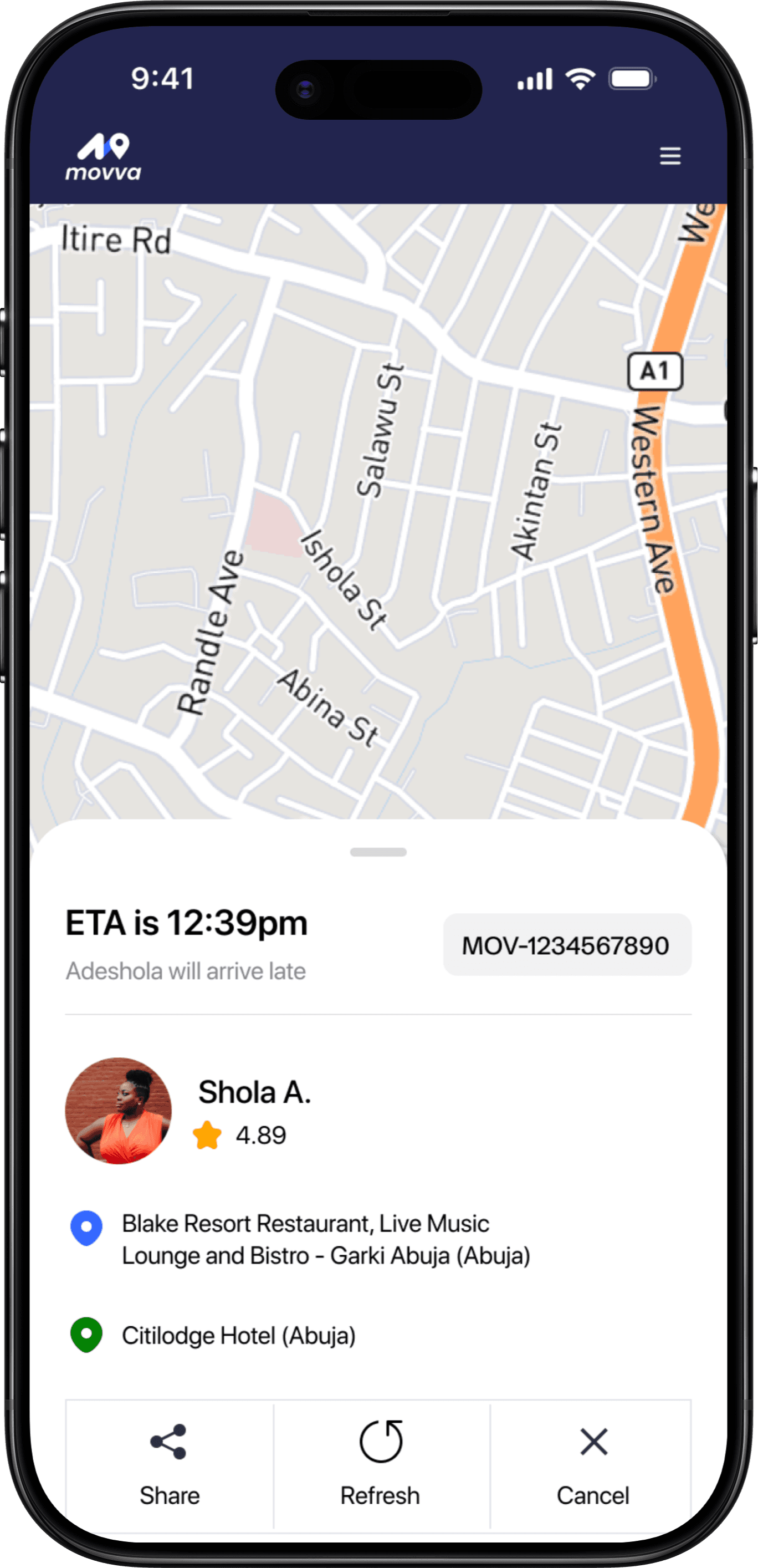
Trust Issues: Showed a verified badge on movers after successful kyc, kept ratings visible, live tracking and protected delivery so senders feel safe.
Usability Across Devices: Optimized for low-end smartphones with offline-friendly flows and lightweight screens.
Proof of Delivery & Disputes: Replaced photo evidence with recipient-only-4-digit code (OTP) at handoff, with limits and resend options.
Outcome & Impact

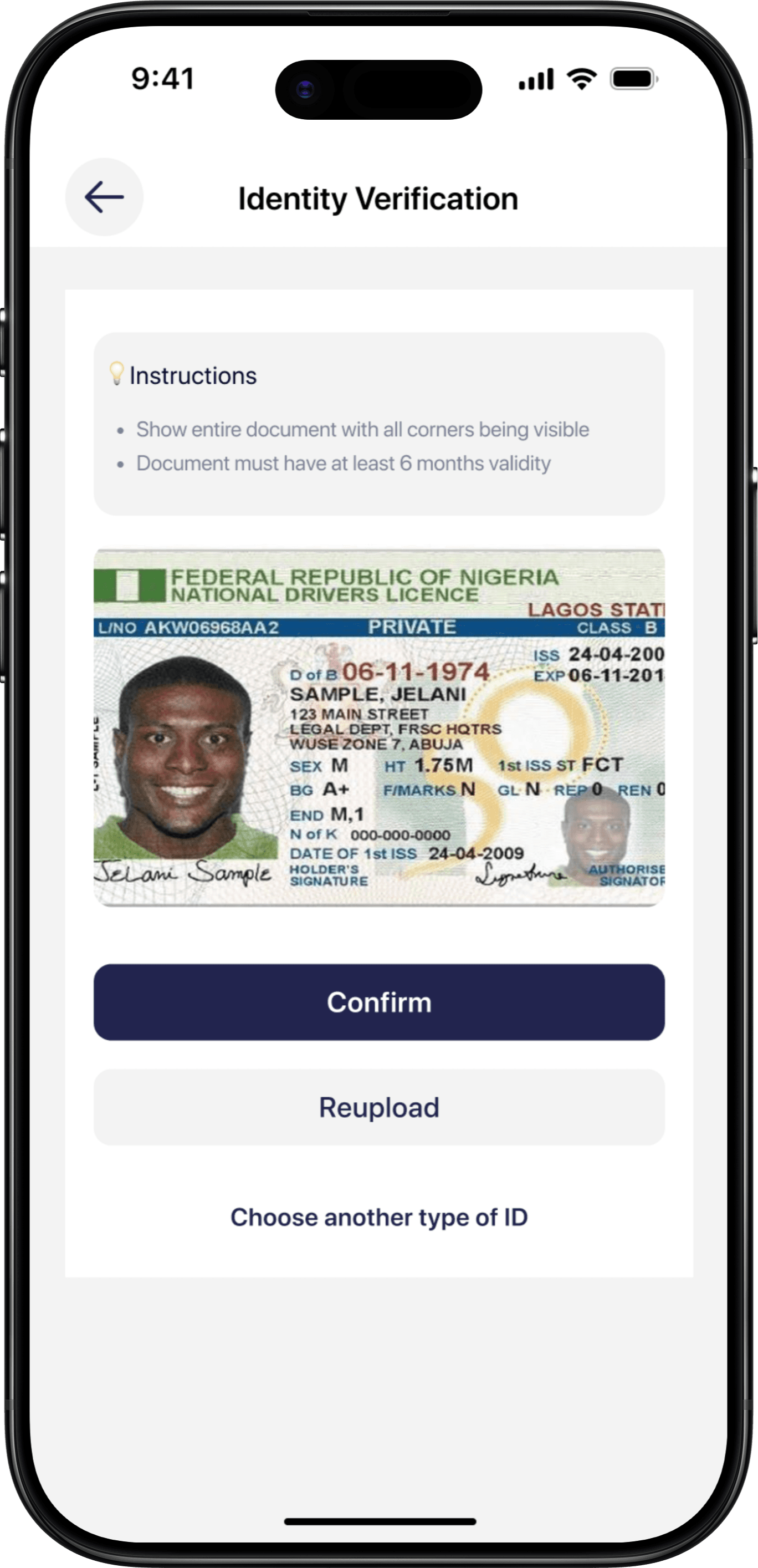
Accessibility: Enabled anyone with an ID to be a mover, regardless of owning a vehicle.
Affordability: Delivery costs reduced by up to 50% compared to competitors.
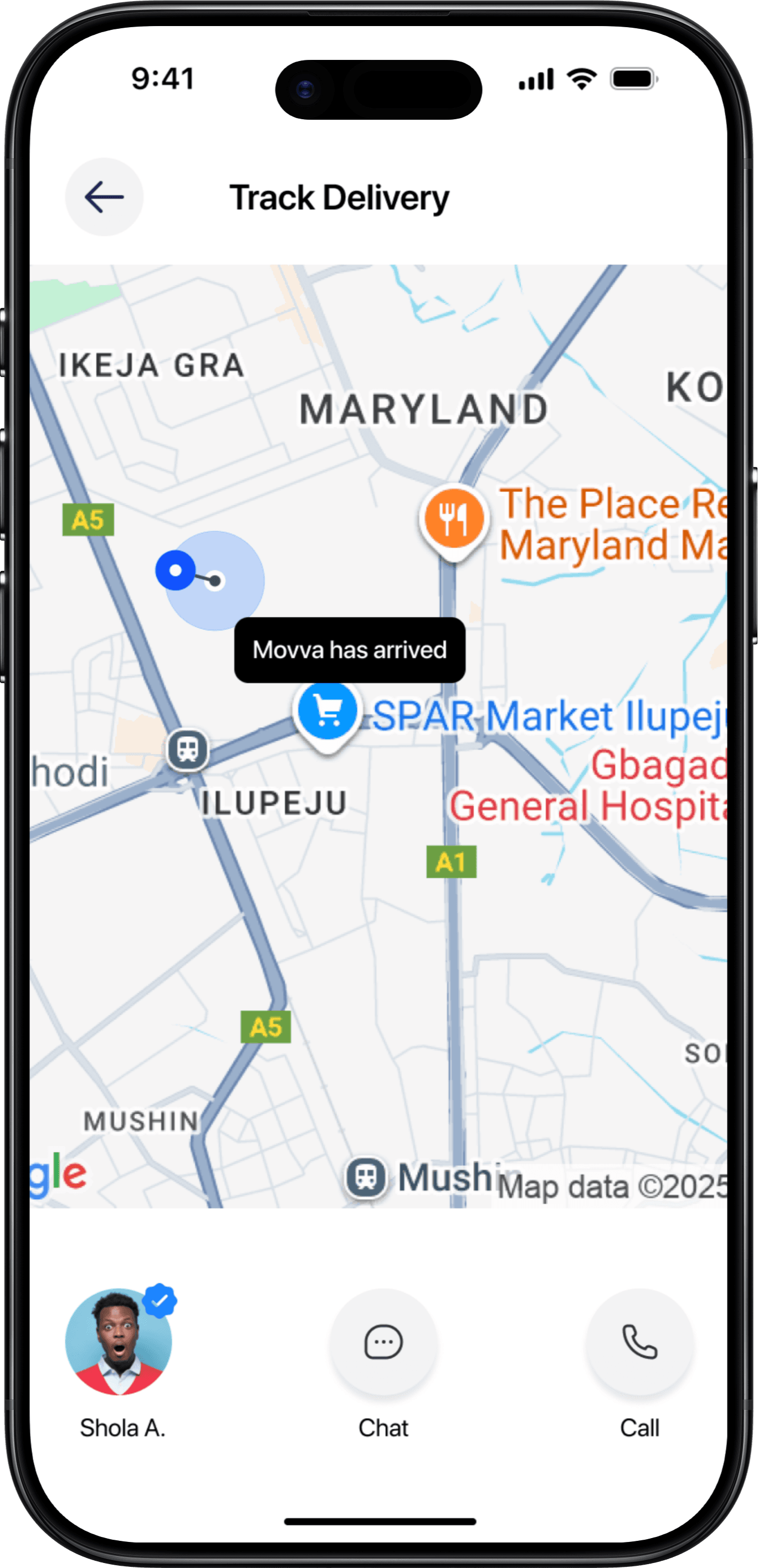
Trust: Senders gained confidence through insurance and real time tracking.
Inclusivity: Created new income opportunities for the unemployed and underemployed.
Reflection & Next Steps
Designing Movva proved that community-driven logistics can be both efficient and inclusive.
Next steps: Introduce AI-driven route optimization for movers, expand into more cites and beyond and deepen e-commerce partnerships for higher adoption.

Role
Product Designer
Collaborators
Product Manager, Founders,
Frontend & Backend Devs,
Mobile Devs etc.
Duration
Jan 2025 - Jul 2025
Visit website
Deliverables (2 products)
Mover App & Sender App
Movva is a decentralized last-mile delivery marketplace empowering individuals to earn income by delivering packages along their daily public transport routes. The platform connects senders with vetted "Movvas" and insures packages, aiming to transform logistics and foster community economic empowerment in Africa and beyond.
Movva was conceived as a response to Lagos' fragmented and costly logistics system. Traditional fleet-based delivery services excluded small businesses and everyday people from affordable logistics options, while unemployment remained high.
The affordability gap and a ready supply of movers — side by side, unconnected.
Rush hour hums through Yaba. Three orders sit paid-for in a stall, going nowhere because of the hefty delivery fee. A student boards a bus to Ikeja—exactly the same route the parcels need. The city is full of movement, logistics just isn't tapping it yet.
Opening Scene
Lagos, with its population of over 20 million people, is a bustling economic hub and a focal point for trade and commerce in Nigeria. However the city's logistics infrastructure is severely strained strained by:
High Costs: SMEs lose out on sales due to the fact that the traditional delivery systems rely on fleets of bikes, and vehicles, resulting in expensive services that many individuals and customers cannot afford.
Lack of Accessibility: Logistics solutions are often tailored for established businesses, leaving small and informal traders with limited options for moving goods.
Inefficiency: Handling multiple orders with different destinations, rising fuel costs, fleet maintenance challenges, and the added burden of local council regulations and task force regulations and task force interventions, further complicating timely deliveries.
Design Challenge: How might we create an inclusive, affordable and trustworthy delivery experience for both senders and movers?
Problem Statement
Research & Insights
Users already move: design just had to match and protect.
User Persona
Meet Aisha and Chinedu—the sender who needs price clarity and the mover who needs fair, on-route work with visible protection.
Design Process
(a) User Flows
I mapped out two primary flows:
Sender Flow - Submit Details → Book → Track Delivery.
Mover Flow - Accept task → Navigate → Confirm drop-off
Both flows emphasized clarity, trust and simplicity.
(b) Wireframes
Sender App: Simple booking screen with transparent pricing breakdown.
Mover App: Task list optimized for low-data environments, with easy navigation and confirmation code for proof to authenticate delivery.
(c) High-Fidelity Prototypes
Design direction: Created a simple and mobile-first experience that keeps the price, ETA, and who's handling your parcel always clear, so people can book without guesswork. Senders see transparent pricing before they confirm, get a shareable tracking link and delivery is verified with a recipient-only 4-digit code instead of photos. Movers get a feed of jobs that match
their route and time, with a clear payout and small detour estimate, plus navigation that still works when data is weak. The whole flow tolerates poor connectivity by queuing actions and syncing later, so senders stay informed and movers keep earning.
Challenges & how we solved them
Trust Issues: Showed a verified badge on movers after successful kyc, kept ratings visible, live tracking and protected delivery so senders feel safe.
Usability Across Devices: Optimized for low-end smartphones with offline-friendly flows and lightweight screens.
Proof of Delivery & Disputes: Replaced photo evidence with recipient-only-4-digit code (OTP) at handoff, with limits and resend options.
Outcome & Impact
Accessibility: Enabled anyone with an ID to be a mover, regardless of owning a vehicle.
Affordability: Delivery costs reduced by up to 50% compared to competitors.
Trust: Senders gained confidence through insurance and real time tracking.
Inclusivity: Created new income opportunities for the unemployed and underemployed.
Reflection & Next Steps
Designing Movva proved that community-driven logistics can be both efficient and inclusive.
Next steps: Introduce AI-driven route optimization for movers, expand into more cites and beyond and deepen e-commerce partnerships for higher adoption.